MI SELECCIÓN DE NOTICIAS
Noticias personalizadas, de acuerdo a sus temas de interés



Agregue a sus temas de interés
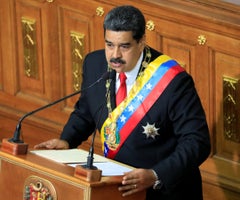
Venezuela’s fearsome intelligence service struck another blow against the democratic opposition last week by arresting Edgar Zambrano in Caracas. In detaining the vice president of Venezuela’s National Assembly, the thugs surrounding presidential pretender Nicolás Maduro not only put another hostage in their dungeon but also thumbed their noses at U.S. ultimatums to respect the rights of the opposition-or else.
They know that while the U.S. says the use of force is on the table, President Trump is loath to use it. With the rest of the region opposed to military intervention, Mr. Maduro’s minions feel safe from outsiders. They would feel far less secure if the international community put pressure where it belongs: on their homeland, Cuba.
Interim President Juan Guaidó remains free, but the regime now holds some 870 political prisoners, according to the Venezuelan nongovernmental organization Foro Penal. Since a failed uprising April 30, Mr. Maduro’s henchmen have doubled down on repression. The opposition is powerless to respond. Mr. Guaidó said Saturday he would seek U.S. military support.
Rescuing Venezuela starts with the recognition that the country is occupied. Russian military support is troubling-as is the Venezuelan-Iranian relationship, which I wrote about in November 2014. Tehran has likely planted sleeper cells throughout the country.
Yet it is Havana that has the most to lose if Mr. Maduro goes down. And it is Havana that is executing an aggressive daily ground game to protect him. This must first be acknowledged by the democracies that have recognized Mr. Guaidó as the rightful chief executive under the Venezuelan constitution. Then, to follow through, they need a strategy to squeeze the Cubans.
Cuban-born writer Carlos Alberto Montaner described the secret behind Mr. Maduro’s survival in a May 5 column for Miami’s El Nuevo Herald. “Loyalty and obedience emanate from respect or fear and Maduro is neither respected nor feared,” Mr. Montaner wrote. “Not only is this the attitude of the opposition. It is shared by military leaders, the regime’s apparatchiks and those people who serve them. That’s why Maduro only trusts ‘the Cubans.’ They made him the heir of the ‘eternal Commander’ ”-Hugo Chávez-“and they keep him in power.”
The main levers of power Cuba wields in Venezuela are its sophisticated intelligence apparatus and its crack military counterintelligence. The former head of the Venezuelan intelligence service, Manuel Christopher Figuera, trained and worked closely with Cuba. It was a mark of Cuban power that after he turned against Mr. Maduro during the April 30 showdown with Mr. Guaidó, he was forced to flee for his life and now is in hiding.
Cuba is thoroughly invested in Mr. Maduro’s survival because it needs Venezuelan subsidies. The money-grubbing Castros have wrecked the Cuban economy. What hasn’t been stolen has been destroyed through decades of brutal repression.
As Cuban-American economist Carmelo Mesa-Lago observed in March, Castro’s Cuba has been a dependency for 60 years. The Soviet Union poured $65 billion into the island from 1960-90. With the dissolution of the Soviet empire, aid to Cuba dried up and the 1990s were an extremely difficult period. But Venezuela picked up the subsidy slack when Chávez came to power in 1999. “At its peak in 2012, Venezuelan aid, subsidies and investment amounted to $14 billion, or close to 12% of gross domestic product,” Mr. Mesa-Lago wrote.
“Cuba is now facing its worst economic crisis since the 1990s,” Mr. Mesa-Lago explained. It refuses to reform its sclerotic economy-because economic power gives way to political power. Now its Venezuelan sugar daddy is cutting back on aid. Oil shipments to the island have been halved in recent years, and Caracas no longer has unlimited resources to pay the Castro regime for the tens of thousands of Cuban doctors, teachers, sports trainers and managers of ports and airports-not to mention security forces-in Venezuela.
Things will go from bad to worse for Havana if Mr. Guaidó is allowed to hold elections. This is why the Cubans are ruthlessly cracking down on the opposition while making the absurd proposal to the Lima Group that Havana ought to mediate a compromise solution. As if the fox ought to decide the fate of the hens. Defectors repeatedly testify that Cubans are behind the Venezuelan police state. It’s why the U.S. and its allies must shift their focus to Havana.
The Trump administration has been adding sanctions against the Cuban regime. Ships that carry oil from Venezuela to Cuba can no longer enter U.S. ports; Americans can now sue in U.S. courts over property confiscated by Cuba; and the ceiling on remittances from the U.S. has been reduced. Havana is feeling some heat. But it isn’t enough.
To persuade Cuba to exit Venezuela, the price of staying has to be higher than any benefits it still receives. That’s a hemispheric project, and it’s the best way to liberate Venezuela from tyranny.
Según explicó Ackman, la colocación privada de fondos está condicionada a la captación de un mínimo de US$5.000 millones

La mayor empresa discográfica del mundo dijo que su junta directiva autorizó la monetización de la mitad de su participación accionarial en Spotify

Este metal sigue siendo uno de los insumos más importantes para la economía global, debido a su uso en construcción, redes eléctricas y tecnología


